Busisiwe Mbele: A Taking Care of Business Success Story | Repair Programme (Johannesburg)
My name is Busisiwe Mbele. I’m 30 years old, a mother of one daughter, and I live in Tembisa, Gauteng, with my daughter, my cousin, and my father. I carry the responsibility of caring for both my child and my father. Before joining TCB in August 2023, I was selling vetkoeks and ice pops to make a living.
I joined the TCB Repair Programme because I wanted to grow as an entrepreneur and gain practical experience in business—something I didn’t get when studying entrepreneurship and project management at school. I thought the journey would be easy, but it quickly became tough and then even tougher. But at the end of the tunnel, I saw a little light. That light gave me hope, and things began to change as soon as I stepped out of my comfort zone.

At first, my journey with TCB was difficult. There were moments when I felt like giving up and walking away. But thanks to the support from the management team and fellow participants, I stayed the course. I’m still here, still kicking and learning every day. Through the technical training, coaching, and sessions provided by TCB, I’ve gained valuable skills and knowledge. Being given the opportunity to join the Repair Programme has truly stood out for me.
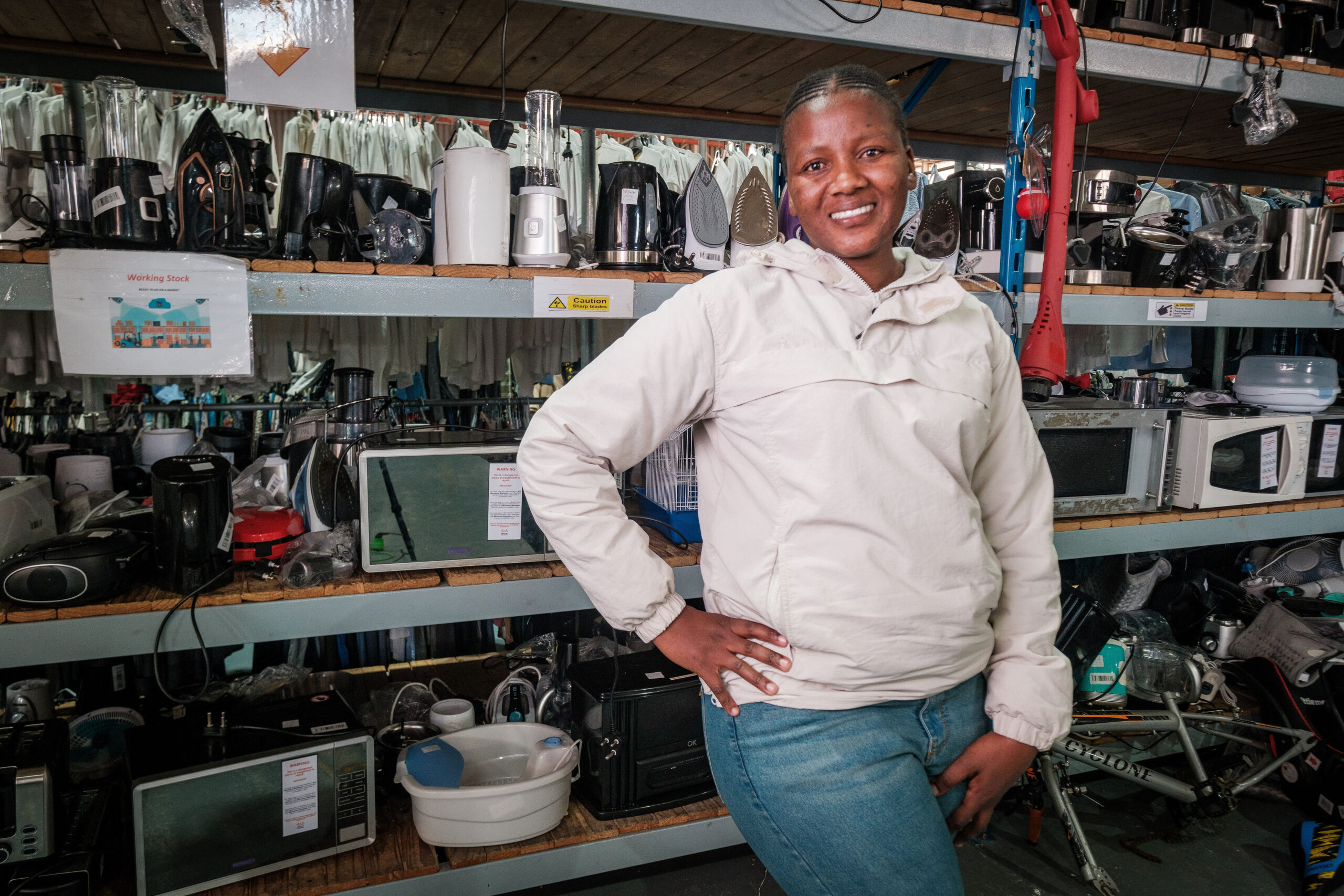
One of the biggest highlights has been learning how to repair electrical appliances. I also learned essential financial skills, like managing money and separating personal and business finances—thanks to the “Money Matters” sessions. As a woman, being able to fix appliances is something I’m incredibly proud of. Fixing and selling refurbished appliances as a young woman in today’s world is a major achievement. The skills Mr. George (the Training and ED Manager) has passed on to me are unlike anything a college or university could have offered. Only TCB gave me this chance. Being part of the circular economy feels like a privilege.
Since joining, I’ve changed in many ways. I’ve gained confidence. Before, I didn’t have the courage to go out and sell. I lacked business skills, like how to present products or how to introduce myself as a businessperson. Now, I sell with confidence and can earn a living from it. I no longer rely on others, I can support myself. I’m not a burden to my family anymore; I’m one of the providers. I’m able to contribute and put food on the table.
Although we’re not yet financially stable, we’re starting to settle. We can meet our basic needs – things like water, electricity, food, clothing, and shelter.
What I love most about running my own business is the freedom. I’m my own boss. I get to run things my way, and I understand how the business works, how money comes in and goes out. My future goal is to build a customer-centric appliance repair, maintenance, and installation company that serves both residential and commercial clients. I want to offer fast, reliable, and affordable services that ensure customer satisfaction and become the go-to name in the industry.
My advice to others is simple: stay committed to your dreams and don’t procrastinate. Always be willing to learn. Go to business seminars, connect with people already in the industry, learn from them, and put your knowledge into practice. Commitment is key. Don’t give up, always aim higher.
Something that has really helped me on my journey is that I don’t let my background or current struggles define me. I keep pushing forward through thick and thin, because I understand that no one owes me anything but I owe myself success. I’m reliable, driven, and fully committed. The two things I can’t live without are my family and God.
And what keeps me going? My daughter. Every time I’m repairing irons and she hands me the tools I need, it pushes me to do more. Being a woman who fixes appliances boosts my confidence and makes me want to keep growing. I love showing my daughter that women can do anything – even fix appliances.
Taking Care of Business (TCB) is a nonprofit social enterprise. We are empowering unemployed South Africans and their families to escape the cycle of poverty through small business opportunities, mostly within the circular economy.